A few rules. A lifetime of discovery.
Go is played by two people who take turns placing black and white stones on a grid. The rules can be learned in minutes; the strategy continues to unfold for a lifetime.
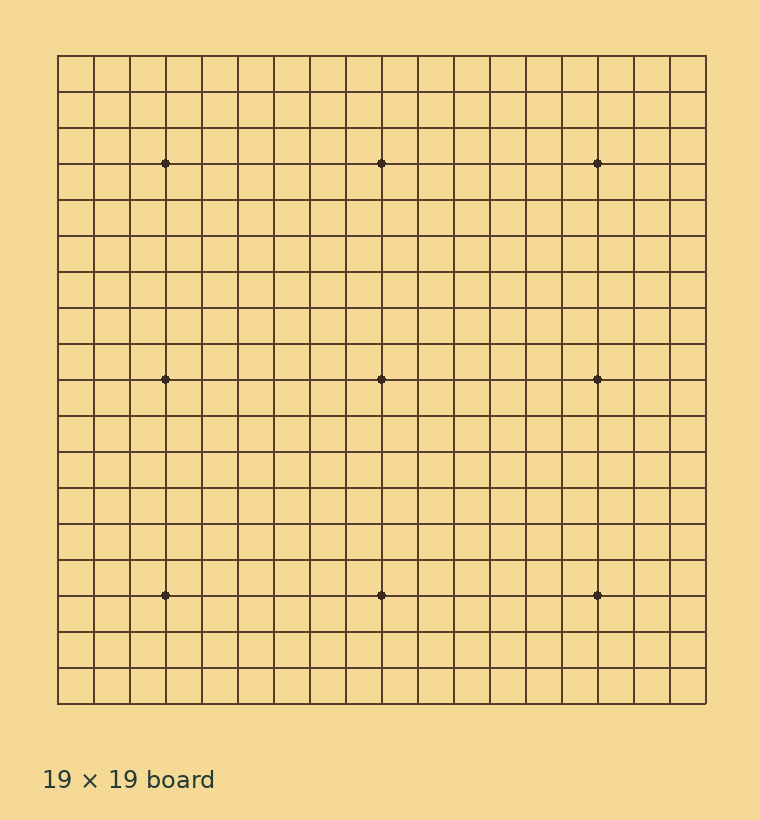
Learn one idea at a time
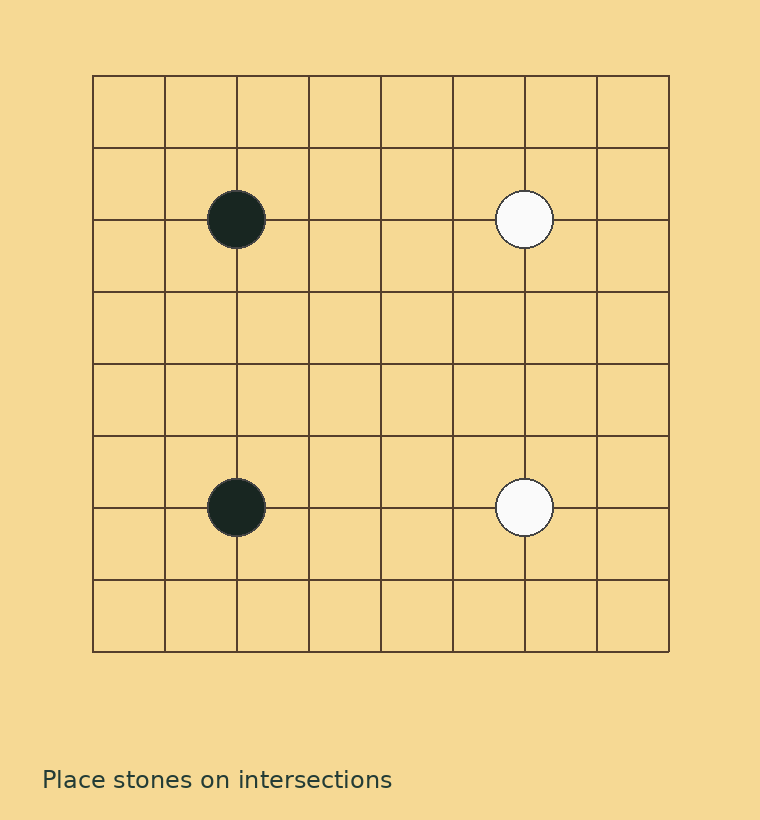
Each diagram shows one essential idea. Stones are placed on intersections—not inside the squares.
Place stones on intersections
Black plays first, then the players alternate. A stone does not move after it is played. It remains on that intersection unless it is captured.
Every stone needs liberties
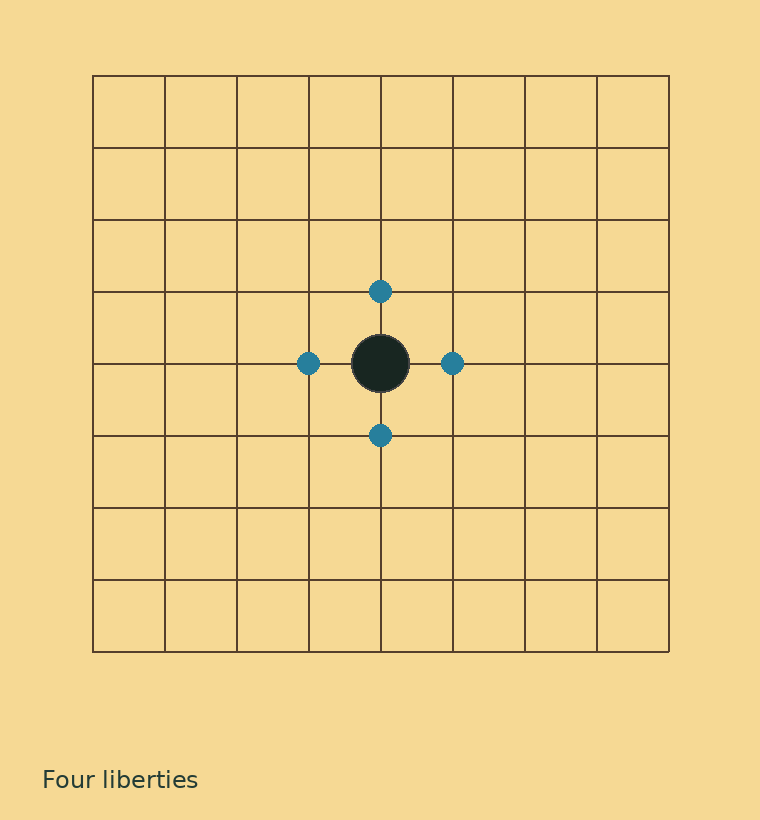
A liberty is an empty point directly beside a stone—up, down, left or right. Diagonal points are not liberties. A lone stone in the centre normally has four liberties.
Connect stones into a group
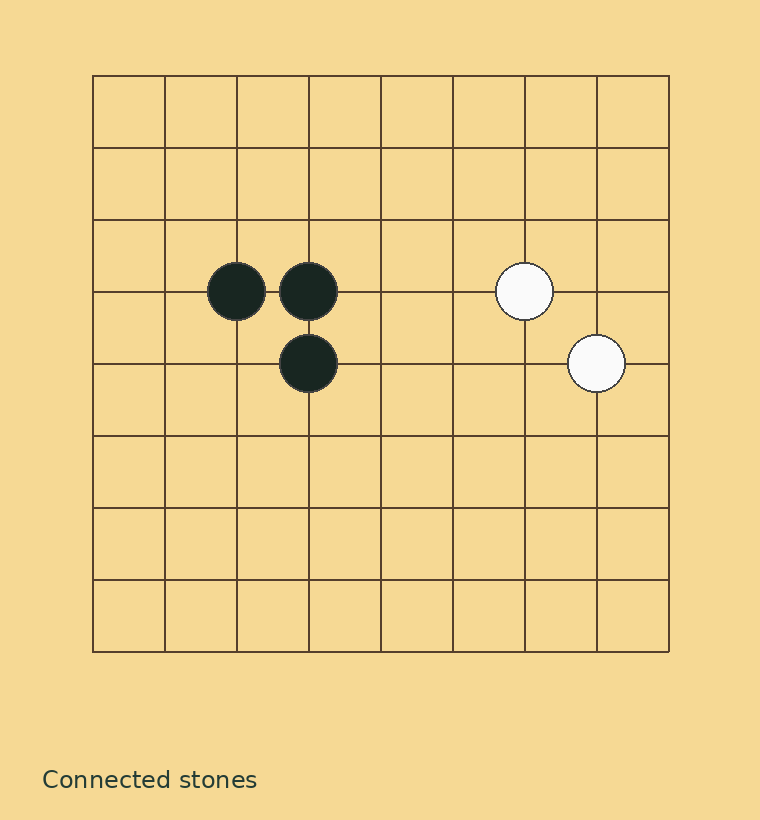
Stones of the same colour that touch along a line are connected. They share their liberties and live or are captured together. Diagonal stones are close, but they are not yet connected.
Surround and capture
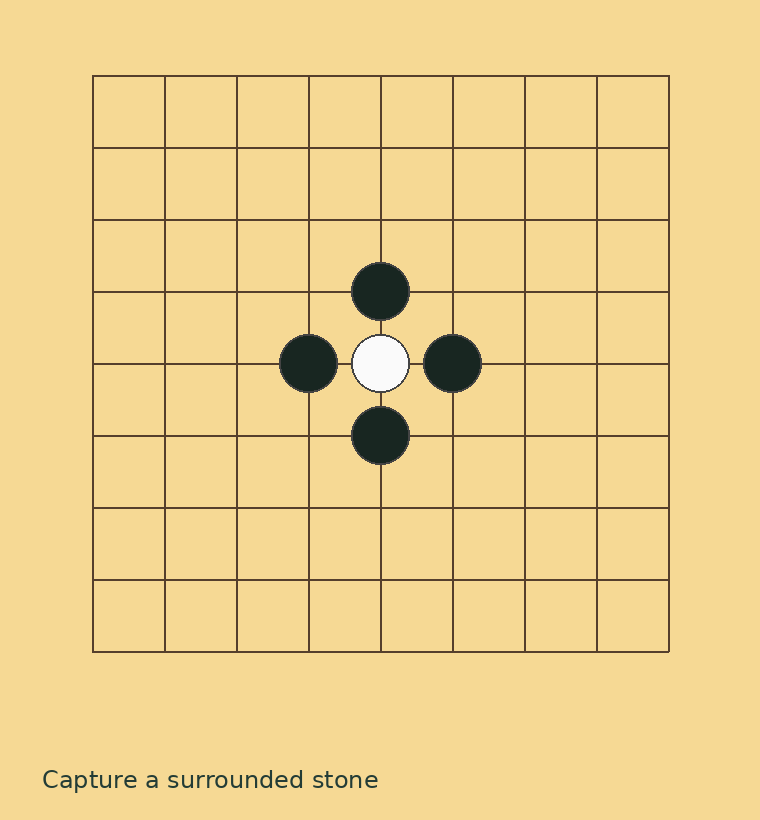
When an opponent’s stone or connected group has no liberties left, it is captured and removed from the board. The diagram shows the position immediately before and after Black fills White’s last liberty.
No suicide—and no immediate repetition
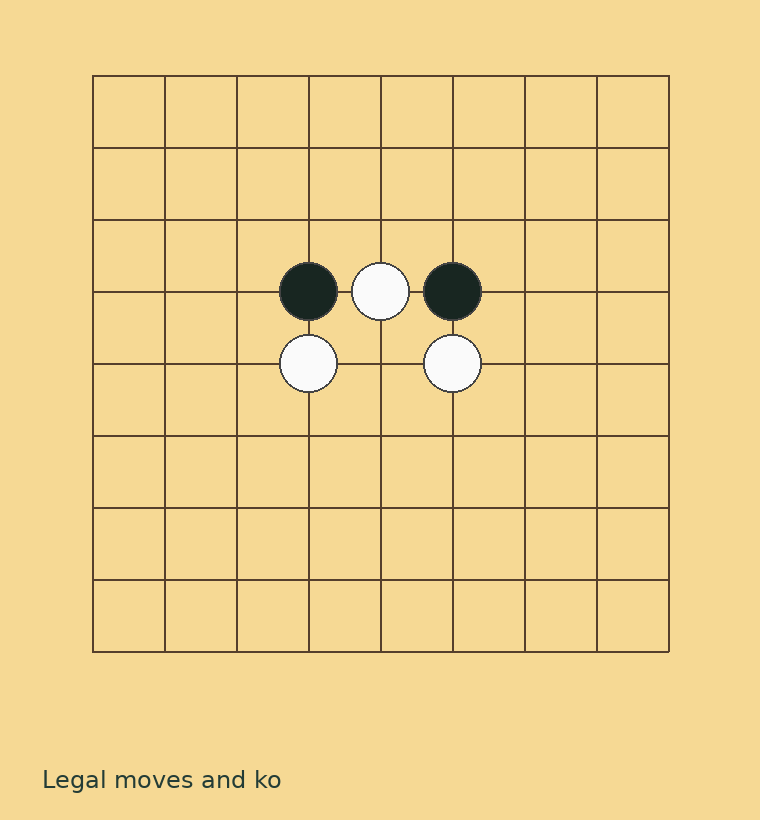
You normally may not play a stone where it would have no liberty, unless that move captures opposing stones. The ko rule prevents an immediate recapture that would repeat exactly the previous board position.
Surround territory
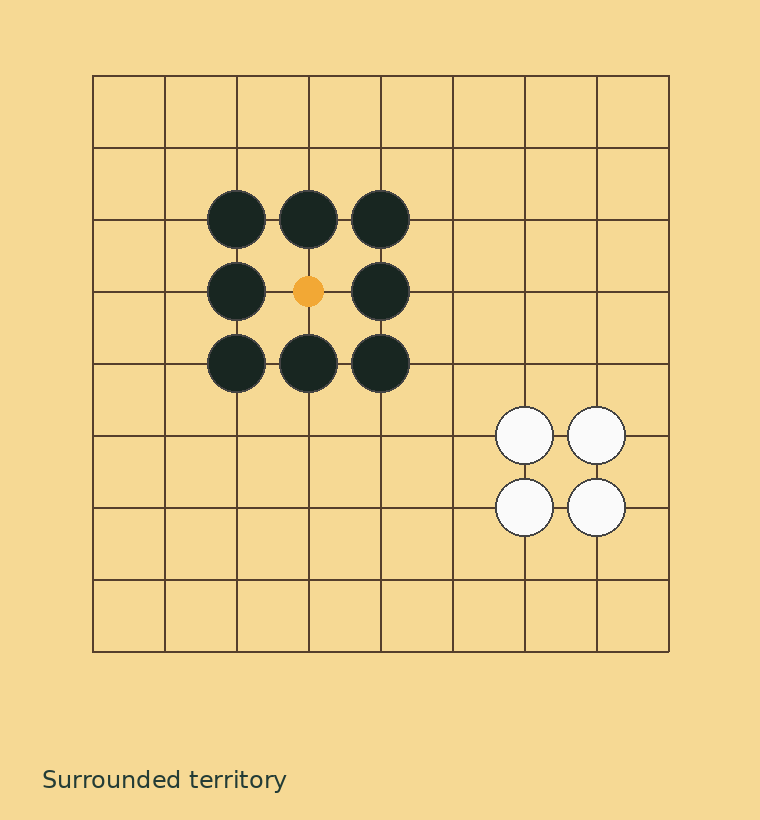
The aim is to control more of the board than your opponent. Empty intersections securely surrounded by one colour become that player’s territory. Captured stones and the chosen ruleset are also considered when scoring.
Finish and count
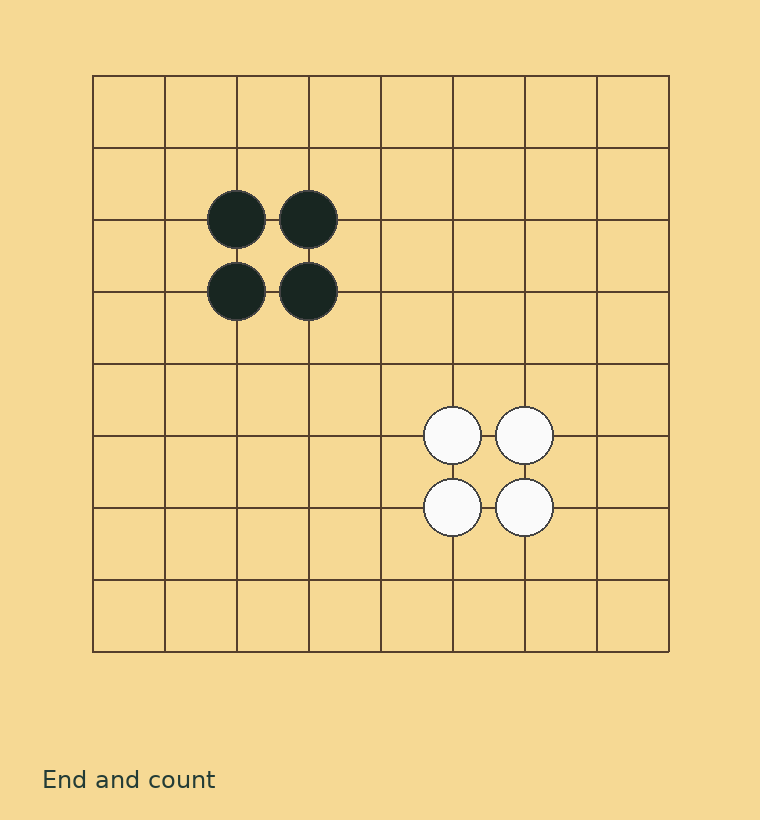
When neither player wants to make another useful move, both pass. Dead stones are agreed and removed, then the result is counted under the rules being used. White normally receives komi to compensate for Black playing first.
Start with a 9 × 9 game
A small board brings the action close together, so a beginner quickly experiences connection, capture and territory. Once these ideas feel natural, 13 × 13 and the standard 19 × 19 board offer more space and deeper strategy.
Learning pathways
Australian Go Center is developing introductory lessons for adults, children, families and school groups. Sessions can cover a first game, foundational strategy, game review or preparation for club and tournament play.
Why learn Go now?
Explore how this ancient game became a landmark challenge for artificial intelligence—and why human judgement, imagination and reflection still matter.